Adequate and balanced nutrition is important for human as nutrients including carbohydrates, proteins, fats, vitamins and minerals are needed for biological function such as energy production, metabolism and growth, systems such as reproduction, respiration and digestion, and prevention of diseases such as brittle bone, heart disease and high blood pressure. Nutrition requirements differ in every stage of life, as there are changes to the biological needs and lifestyle. For instance, the calories needed by elderly may be lower than young and middle-aged adult, with higher protein requirement. This is as muscle and bone degeneration is common, while physical activity and activity of daily living is typically reduced. This article will discuss in detail about nutrition needs for elderly.
充足且均衡的营养对人体健康至关重要。人体所需的营养素,包括碳水化合物、蛋白质、脂肪、维生素和矿物质在多种生理功能中发挥关键作用,如能量生成、新陈代谢、组织生长与修复,以及生殖、呼吸和消化等系统的正常运作。同时,合理的营养摄取对于预防骨质疏松、心脏病和高血压等慢性疾病也具有重要意义。
营养需求会随着生命阶段的变化而改变,这主要与生理功能及生活方式的差异有关。例如,老年人的能量需求通常低于青年和中年成年人,但其蛋白质需求反而更高。这是因为老年阶段常出现肌肉与骨骼退化,而体力活动及日常生活活动能力亦相应下降。
In elderly, – defined as adults aged 65 years old and above – body and lifestyle changes can cause difficulty to consume adequate and healthy food. These include changes in senses of smell and taste, problems with chewing or swallowing, health factor such as problems with walking, taking medicine that can change senses, causes dry mouth and appetite, and dietary restriction due to underlying diseases such as high blood pressure and kidney disease. Living situations such as living alone, limited access to healthy food and lower income level upon retirement can also affect dietary intake.
在老年阶段(通常指65岁及以上的成年人),身体机能与生活方式的变化经常导致难以摄取足够且健康的食物。影响因素包括嗅觉与味觉的减退、咀嚼或吞咽困难、行动不便,以及某些药物的使用可能改变味觉、引起口干或降低食欲。此外,由于潜在慢性疾病,如高血压、肾脏病等所导致的饮食限制,也会进一步影响营养摄取。
生活环境亦是关键因素。独居、获取健康食物的机会受限,或退休后收入水平下降,均可能导致饮食摄入不足,从而影响老年人的营养状况与整体健康。
To ensure adequate and healthy food intake, these are some dietary tips that can be incorporated in daily life:
为确保饮食充足又健康,以下是一些可以融入日常生活的饮食建议:
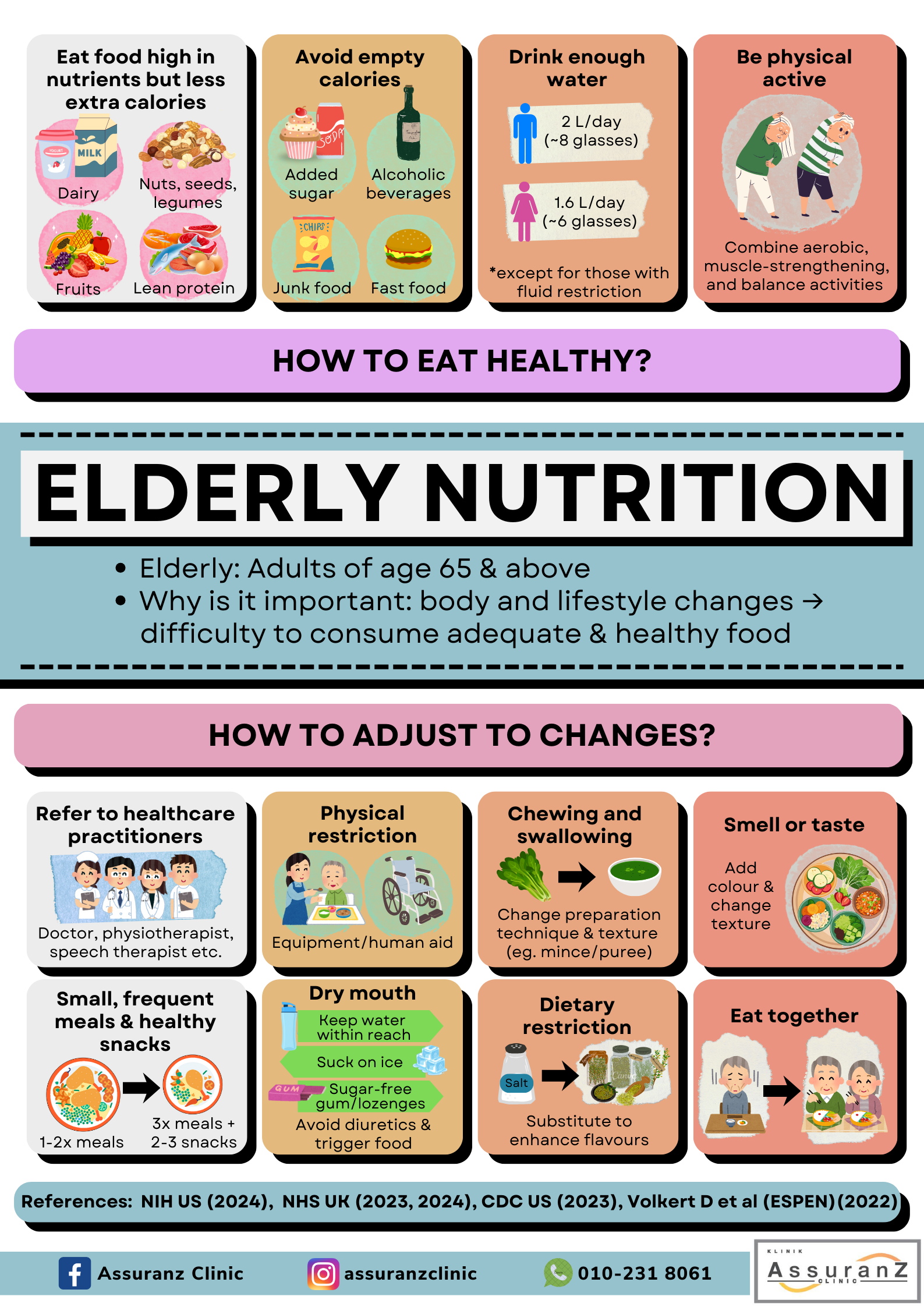
- Eat food high in nutrients but with less extra calories
选择营养密度高、额外热量少的事物
Nutrient dense foods that do not contain excessive calories should be consumed. These foods include fruits, vegetables, wholegrain cereal, low fat or skimmed dairy products or their alternatives (preferably with added calcium and vitamin D), lean poultry, lean meat, fish, seafood, egg, seeds, nuts, and beans.
建议选择营养丰富、热量不过高的食物。例如:水果、蔬菜、全谷类、低脂或脱脂奶制品及其替代品(最好强化钙和维生素D)、瘦禽肉与瘦肉、鱼类和海鲜、鸡蛋、种子、坚果以及豆类等。
这些食物既能满足每日营养需求,又更适合维持健康体态。
- Avoid empty calories
避免摄取“空热量”食物
Empty calories are foods that contain high calories but little nutritional value. These foods should be avoided as they can cause health problems such as overweight and insulin resistance. These foods are typically high in fat, sugar and salt. The examples of empty calories are chips, sweetened beverages, alcoholic beverages, cakes, pastries, instant noodles and fast foods.
“空热量”指的是热量高、营养价值却很低的食物。应尽量避免摄取这类食品,因为长期食用可能导致体重增加、胰岛素阻抗等健康问题。
此类食物通常含有大量脂肪、糖和盐,例如:薯片、含糖饮料、酒精饮品、蛋糕、糕点、方便面以及各类速食等。
为了健康,建议减少这些食物的摄入。
- Drink enough fluid
确保摄取足够的水分
Dehydration is among the common causes of hospitalization in elderly as sense of thirst decrease. Adequate water intake according to guidelines is 1.6 L/day (about 6 glasses) of drinks for women and 2.0 L/day for men (about 8 glasses). Elderly can also increase intake through consumption of food high in water such as watermelon, soup, ice, cucumber, yogurt et cetera. Some conditions such as kidney disease, heart disease, being overweight or obese, and gastrointestinal issue like diarrhoea, require adjustment to fluid intake, therefore, individuals with these conditions should seek advice from healthcare practitioner.
随着年龄增长,口渴感会下降,因此脱水是老年人常见的住院原因之一。
根据建议,女性每日应摄取约 1.6 公升(约 6 杯) 的饮品,男性则需约 2.0 公升(约 8 杯)。
老年人也可以通过摄取含水量高的食物来补充水分,例如:西瓜、汤品、冰块、黄瓜、优格等。
同时需要注意,若有肾脏疾病、心脏疾病、体重过重或肥胖、腹泻等胃肠问题,饮水量可能需做调整,因此应向医疗专业人员咨询,以获得适合的建议。
- Be involved in physical activities
积极参与身体活动
Physical activity can help to preserve muscle and bone mass, contributing to reduced risk of fall and frailty, aside from reducing risk of metabolic illness such as heart disease and stroke. It can also help in improving appetite and increase feeling of hunger for elderly with reduced appetite. At least light intensity exercise such as walking and stretching should be included daily. For optimum health benefit, combination of aerobic, muscle-strengthening, and balance activities should be done each week.
身体活动有助于保持肌肉和骨骼质量,从而降低跌倒和虚弱的风险,同时还能减少心脏病、中风等代谢性疾病的发生风险。对于食欲减退的老年人,适当的身体活动也能促进食欲,增加饥饿感。
建议每天至少进行轻强度运动,如散步和拉伸。为了获得最佳健康效果,每周应结合有氧运动、肌力训练和平衡训练。
It is common for elderly to find it difficult to eat healthily to the aforementioned body and lifestyle changes issues. To combat these problems, these are the things that can be done:
由于上述身体和生活方式的变化,老年人在保持健康饮食方面常常会遇到困难。为应对这些问题,可以采取以下措施:
- Refer to healthcare practitioners
寻求医疗专业人士的建议
Issue such as chewing and swallowing difficulties and physical constraints may require healthcare practitioners’ advice as they can assess whether certain treatment or aids and referral are needed.
对于咀嚼和吞咽困难或身体活动受限等问题,建议寻求医疗专业人员的意见,他们可以评估是否需要特定治疗、辅助工具或进一步转诊。
- Physical restriction
身体活动受限
Health issues may make it hard for the elderly to prepare food, which can result in poor nutrition. Support from family or caretakers and equipment aid such as walking stick and wheelchair can help ease mobility, facilitate meal preparation, thus improve dietary intake.
健康问题可能会让老年人难以自行准备餐食,从而影响营养摄入。家人或照护者的支持,以及辅助设备,如拐杖、轮椅可以帮助行动不便的老年人方便备餐,从而改善饮食状况。
- Chewing and swallowing
咀嚼与吞咽
For elderly with chewing and swallowing problems, adjusting the preparation technique and changing the texture of the food can help. For instance, cutting food into smaller pieces, or blending them into puree can aid ease chewing and swallowing.
对于有咀嚼和吞咽困难的老年人,可以通过调整烹饪方法和改变食物质地来帮助进食。例如,将食物切成小块,或将其搅拌成泥状,都能让咀嚼和吞咽更轻松。
- Smell or taste
嗅觉与味觉
Adding colour and different texture of the food can make food looks more interesting to eat and thus, stimulate appetite.
通过增加食物的颜色和不同质地,可以让食物看起来更吸引人,从而刺激食欲。
- Dry mouth
口干
Elderly may experience dry mouth, affecting their eating. Managing this includes sipping water regularly, keeping it within reach, and sucking on ice. Sugar-free lozenges or chewing gum can boost saliva production. Avoid diuretics like caffeine and alcohol, and limit spicy, acidic, sweet, and fatty foods which can worsen symptoms.
老年人可能会出现口干,从而影响进食。应对方法包括:经常小口饮水,并保持水源触手可及;含冰块以缓解干燥。无糖含片或口香糖可促进唾液分泌。应避免利尿剂如咖啡因和酒精,并限制辛辣、酸味、甜味及高脂食物,以免加重症状。
- Dietary restriction
饮食控制
For elderly with dietary restriction due to conditions such as kidney disease, hypertension and diabetes, substitution can help enhancing flavours. For instance, herbs and spices can be used to replace salt and sweetener such as stevia can substitute sugar.
对于因肾脏疾病、高血压或糖尿病等原因而需要饮食限制的老年人,可通过替代调味来提升食物风味。例如,可用香草和香料代替食盐,或用甜叶菊等甜味剂替代糖。
- Small but frequent meals and healthy snacks in between meals
少量多餐,并在餐间搭配健康零食
Eating small but frequently instead of eating a few large meals might aid in increasing food intake for elderly with appetite problem. Taking healthy snacks such as beans, nuts, yoghurt, and tofu in between meal can also improve intake while providing important nutrients.
对于食欲不振的老年人,少量多餐比少数大餐更有助于增加摄食量。在餐间食用健康零食,如豆类、坚果、酸奶和豆腐,不仅能提高总摄入量,还能补充重要的营养。
- Eat together
一起用餐
Eating alone can feel mundane to elderly, causing reduced appetite. Making new friends by participating in community or senior centre activities, organizing potluck and cooking with friends can ameliorate boredom, making life more interesting, hence, aiding in increasing appetite.
老年人独自用餐容易感到单调,从而影响食欲。通过参加社区或长者中心活动结交新朋友、组织聚餐或与朋友一起烹饪,可以缓解无聊,让生活更有趣,从而促进食欲。